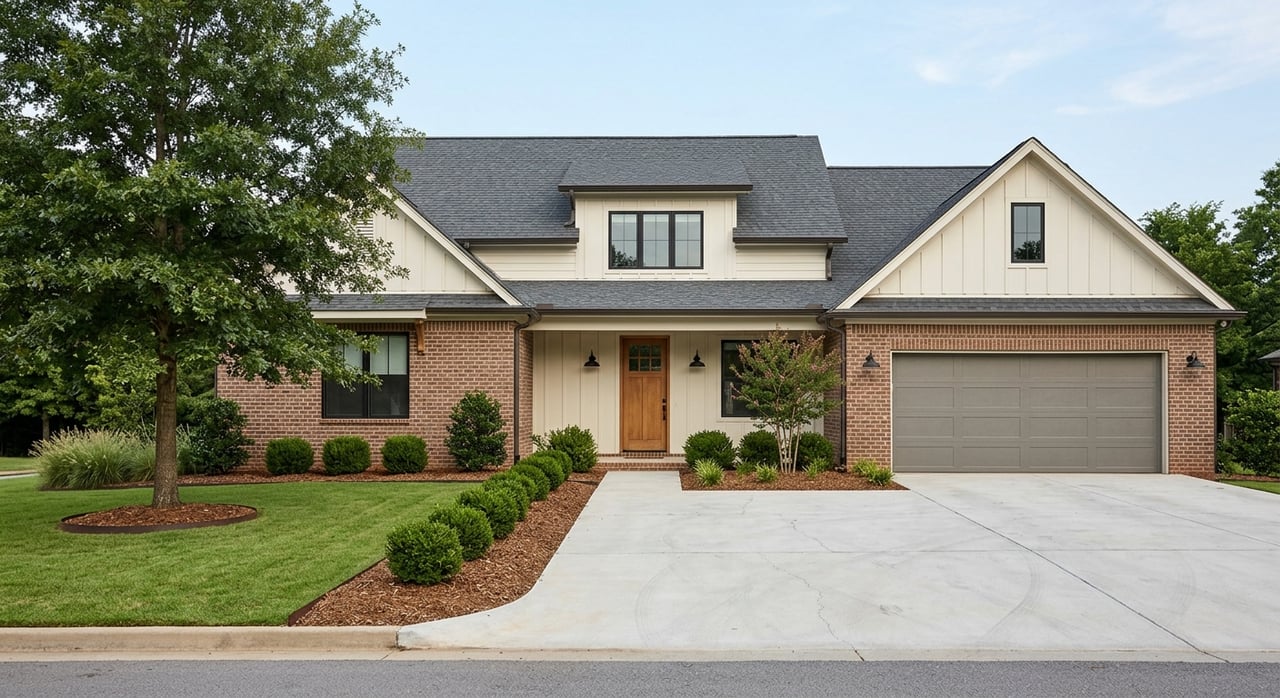
How To Price Your Mustang Home In Today’s Market
June 25, 2026
June 25, 2026
Wondering why one Mustang home gets strong interest right away while another sits and needs a price cut? In today’s market, your asking price does more than set a number. It shapes how buyers respond from day one. If you want to sell with confidence, the key is pricing based on current local data, real competition, and your home’s true position in the market. Let’s dive in.
Mustang is in a market where pricing accuracy matters. Zillow reports an average home value of $279,479 in Mustang, up 1.5% over the past year, with homes going pending in around 34 days. Zillow also shows 222 homes for sale, a median sale price of $262,167, a median list price of $334,200, and a median sale-to-list ratio of 0.999.
Redfin shows a similar pace with a different measurement window. For the three months ending May 2026, Redfin reports a median sale price of $261,194, homes selling after 34 days on market, and a sale-to-list ratio of 98.7%. It also reports that 25.9% of homes sold above list price, while 36.9% had price drops.
That mix tells you something important. Buyers are still active, but they are price-aware. In a market where some homes get multiple offers and many others need reductions, your first price needs to be close to market reality.
A citywide number can help you understand the market, but it should never be your pricing strategy. Mustang home values and buyer response can vary a lot depending on the area, the home’s condition, and how it compares to nearby listings and recent sales.
Zillow neighborhood data shows a wide range in Mustang, from areas like Airline at $88,424 and Rockwood at $96,879 to Brandywine at $318,079. Realtor.com also shows neighborhood-level differences, with Mustang Heights at a median listing price of $184,900 and 35 days on market, compared with Canadian Estates at $303,500 and 74 days on market.
This is why two homes with similar square footage can perform very differently. A buyer does not shop by city average alone. They compare your home to what else is available in the same general area and price range.
The best pricing decisions come from comparable sales, often called comps. These are recent sales of homes that are similar to yours in size, style, condition, and location. They give you a clearer picture of what buyers have actually been willing to pay.
Recent Mustang sales show how wide the range can be. Redfin reports sales including 527 E Linden Ln at $215,000 after 34 days on market, 432 E Twelve Oaks Ter at $265,000 after 56 days, 15132 SW 74th St at $340,000 after 69 days, 1250 N Tea Olive Way at $545,000 after 91 days, and 1248 W SW 59th St at $1.025 million after 72 days.
That spread is exactly why pricing from a broad market average can miss the mark. A good pricing strategy looks at homes that truly compete with yours, not just homes somewhere else in Mustang.
Price is not only about square footage or bedroom count. Buyers also react to condition, updates, layout, lot position, and how move-in ready the property feels. These details influence which homes should be used as comps and how your list price should be adjusted.
A remodeled kitchen, newer flooring, strong curb appeal, or a better lot may support a stronger price. On the other hand, deferred maintenance or outdated finishes may mean buyers expect more value for the money. In today’s market, buyers tend to notice condition quickly, especially when borrowing costs remain elevated.
Freddie Mac reported a 30-year fixed mortgage rate of 6.47% as of June 18, 2026. When monthly payments are more sensitive to price, buyers often become more selective about what they are willing to pay for a home that needs work.
It is easy to think you can start high and reduce later if needed. In practice, that strategy often works against sellers. The first days on market are usually when your listing gets the most attention, so an inflated price can reduce urgency before serious buyers even book a showing.
This risk is especially relevant in Mustang. Redfin says 36.9% of listings had price drops, and Zillow shows 44.9% of Mustang sales closed below list price. If your home starts too high, buyers may skip it, wait for a reduction, or compare it unfavorably to better-priced alternatives.
A stale listing can also change how buyers negotiate. Instead of feeling pressure to act quickly, they may assume there is room to bargain. That can affect both your timeline and your final net proceeds.
Pricing well does not mean pricing low. It means pricing in a way that matches market evidence and encourages the right buyer response. In Mustang, that can lead to faster showings, stronger offers, and a smoother sale.
Redfin reports that some Mustang homes receive multiple offers, and hot homes can go pending in about 8 days while selling near list price. That kind of response usually happens when buyers feel the home is positioned well against current competition.
When your price is realistic from the start, you widen your buyer pool. More buyers may see value in the home, which can improve your leverage and reduce the chance of repeated price cuts.
Automated home values can be a helpful starting point, but they should not be treated as your final list price. The Consumer Financial Protection Bureau explains that an automated valuation model, or AVM, is a computer-generated estimate based on property data and market information.
That kind of tool may miss details that matter to buyers in Mustang. It may not fully account for remodel quality, exact subdivision placement, visible condition, or the latest closed sales that are most relevant to your home.
A local comparative market analysis, or CMA, adds human judgment to the process. It uses recent comparable sales, current competing listings, and property-specific details to help you choose a more accurate price.
In a market where the sale-to-list ratio is close to 1.0 but timing and pricing vary by area, a local CMA gives you more useful guidance than a broad estimate. It helps you understand not only value, but also positioning.
That includes questions like these:
This is where experienced local review matters. Clean data, accurate home details, and a current read on buyer behavior can make a meaningful difference in your pricing strategy.
If you are getting ready to sell in Mustang, think of pricing as a launch strategy, not just a number. Your goal is to enter the market at a price that reflects current demand, supports strong early interest, and helps you avoid unnecessary reductions.
A practical approach usually includes:
Mustang is priced above the Oklahoma statewide average home value of $223,590, and homes are moving a bit more slowly than the statewide pending pace of about 25 days. That makes local precision even more important. In this kind of market, the right price helps your home stand out for the right reasons.
If you want a pricing strategy built around real local comps and clear guidance for your next move, Access Real Estate is here to help you price with confidence and bring your home to market with a smart plan.
Stay up to date on the latest real estate trends.
Give us a call when you are ready to make a move. We would be honored to assist with any and all of your Oklahoma Real Estate needs.