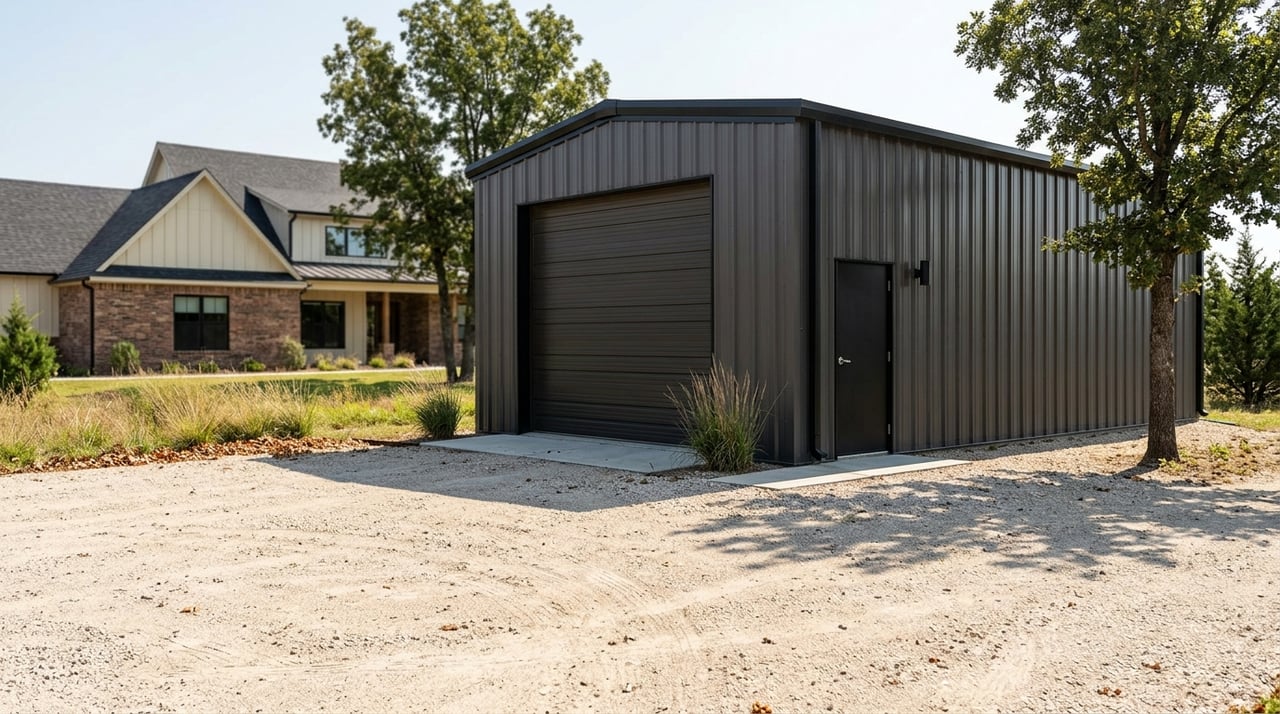
Buying Farm, Ranch, And Acreage Property Near Shawnee
May 7, 2026
May 7, 2026
If you are thinking about buying farm, ranch, or acreage property near Shawnee, it helps to know this up front: land is rarely a simple purchase. What looks straightforward in a listing can involve city rules, county records, water questions, floodplain concerns, and boundary issues that only show up once you dig deeper. The good news is that with the right due diligence, you can move forward with more confidence and avoid costly surprises. Let’s dive in.
One of the first things to confirm is whether the property sits inside Shawnee city limits or outside the city in unincorporated Pottawatomie County. That matters because the rules can change based on where the tract is located.
Inside Shawnee, zoning boundaries are established by ordinance and shown on the city zoning map. The city’s building permit form also includes a drive approach or curbcut item, which means changes to access may require city review. If the tract is outside city limits, county offices often become the key sources for floodplain, addressing, and road access questions.
For you as a buyer, this means two nearby properties may come with very different requirements. A smaller acreage tract near town may involve city zoning and permit review, while a more rural tract may depend more on county processes and rural infrastructure.
A great-looking property is not so great if access is unclear. Before you compare one tract to another, make sure you understand how you legally get to the land and whether that access is properly recorded.
The Pottawatomie County Clerk records deeds, mortgages, liens, plats, oil and gas leases, and other land documents. That makes the clerk’s office one of the most important places to verify legal access, easements, and older recorded plats that may affect a private lane or shared drive.
This step matters because fence lines and deed lines do not always match. If a driveway crosses another parcel, if the tract is being split, or if access is based on an old lane, you will want to confirm the legal description and any easement language instead of relying only on what you see in person.
A survey can be especially helpful when boundaries are unclear or improvements sit close to the edge of the property. Gates, barns, ponds, and fencing may suggest one boundary line, while the recorded legal description says something else.
If you are buying acreage for livestock, recreation, a future homesite, or long-term investment, clear boundaries are essential. This is one of those areas where a little extra diligence upfront can protect your plans later.
Before closing on rural land, make sure the tract you are reviewing is the tract you are actually buying. The Pottawatomie County Assessor points buyers to public parcel-search resources for basic property data and parcel lookup, which can help you confirm the property details before a site visit or contract decision.
Addressing is another practical step that buyers sometimes overlook. If the property does not yet have a usable address, the county 911 director handles rural 911 address requests.
That may sound like a small detail, but it matters for deliveries, utilities, insurance conversations, and emergency response. On acreage property, a usable address is part of making the land functional, not just official.
Water can shape how the property works day to day, especially if you plan to build, keep livestock, or use the land for more than a simple long-term hold. Near Shawnee, your water review should include both source and permitted use.
According to the Oklahoma Water Resources Board, domestic groundwater use does not require a water permit. Other groundwater uses are regulated, and permit applications must be filed before groundwater is taken or a groundwater well is drilled.
The same agency states that intent-to-drill authorization is required for certain non-domestic wells, including uses such as irrigation of more than 3 acres and other commercial uses. Domestic wells, livestock up to the land’s grazing capacity, and irrigation of less than 3 acres are treated differently.
If the property includes a pond, creek, spring, or other surface-water feature, do not assume that water is automatically available for any use you want. Surface water generally requires Oklahoma Water Resources Board permitting, with limited exceptions for domestic use and capture of diffused surface water on the owner’s property when stream flow is maintained.
This is one of the most common areas where buyers make assumptions. Water on the land and water rights for your intended use are not always the same thing.
If the tract uses a private well, water testing should be part of your due diligence. Oklahoma State University Extension recommends testing well water at least yearly for nitrates, total dissolved solids, pH, and fecal coliform.
OSU Extension also notes that stock ponds and other livestock water sources can be evaluated for total salts, nitrate levels, and related concerns. If the property’s value to you depends on dependable water, getting clear answers early is worth it.
Soils are one of the most overlooked parts of buying acreage, but they affect almost everything. Whether you want pasture, a pond, a homesite, septic performance, or a future land investment, the ground itself matters.
The USDA NRCS Web Soil Survey provides current soil information, maps, and downloadable data for land-use and management decisions. For buyers near Shawnee, that makes soil review a practical starting point when comparing one tract to another.
A property may look open and usable at first glance, but soil conditions can affect drainage, construction plans, and long-term function. If your goals include livestock, building, or holding land for future improvement, soil maps can help you ask better questions before you buy.
If you plan to keep animals, look at fences, gates, and water delivery as one connected system. A property with decent pasture but poor water access or inadequate fencing may require more work than the listing suggests.
OSU Extension notes that a 1,500-pound cow can need 10 to 20 gallons of water per day. The same guidance recommends fencing pond dams and basins and using freeze-proof stock tanks or limited-access watering points to help improve water quality and reduce shoreline damage.
Fence design also needs to match the species you plan to keep. OSU Extension notes that smaller livestock may require more secure containment than cattle, so a fence that works for one use may not work for another.
When acreage includes a house, barn, septic system, fencing, or utility improvements, each item should be reviewed on its own merits. Rural property value often depends on how usable those improvements really are, not just the fact that they exist.
If there is a residence on the property, the septic system deserves special attention. OSU Extension recommends locating and mapping the septic tank and lateral line field and, if possible, having the tank pumped before purchase if it has not been serviced within the last three to five years.
If you expect to add fencing, repair outbuildings, or improve a homesite after purchase, OSU Extension also reminds buyers to call OKIE before digging. Buried utility lines can create both safety risks and expensive problems.
Floodplain exposure is a major issue for some Shawnee-area tracts, especially those with creek bottoms, pond edges, or low-lying ground. A property can be attractive for views, grazing, or recreation and still carry building or use limitations in certain areas.
Pottawatomie County Emergency Management publishes floodplain management tools, including a floodplain ordinance, permit application, elevation certificate, engineering no-rise certificate, and review checklist. Those local resources are important when evaluating low areas or future building plans.
OSU Extension also warns that land along creeks and rivers can flood and is often better left as farmland or natural vegetation rather than used as a building site. If part of the tract lies in a flood-prone area, that does not automatically make it a bad property, but it does change how you should evaluate it.
Acreage ownership often comes with more responsibility than buyers expect. Roads, gates, drainage, water access, and emergency readiness all become part of the ownership experience.
OSU Extension notes that power outages can last longer in rural areas. It also warns that wildfire can affect power lines and rural water, which means you should not rely only on pressurized water as a fire strategy.
The same guidance recommends maintaining roads and gates so they remain usable in an emergency. In other words, buying acreage is not just about what the land offers today. It is also about what it will take to manage it well over time.
Before you move forward on farm, ranch, or acreage property near Shawnee, focus on a few core questions:
Acreage purchases can be rewarding, but they ask more of you than a typical residential closing. The best approach is a careful one that matches your goals with the property’s real-world function.
When you are weighing land options near Shawnee, it helps to have a team that understands both the excitement and the complexity of a rural purchase. If you are ready to talk through your next move, connect with Access Real Estate for thoughtful guidance backed by local market knowledge and a steady, detail-focused approach.
Stay up to date on the latest real estate trends.
Give us a call when you are ready to make a move. We would be honored to assist with any and all of your Oklahoma Real Estate needs.